Facebook
Twitter
YouTube
Instagram
    • español
    • English
  • Contacto
  •  
    • español
    • English
  • Mi Cuenta
Acerca deAutoresTítulosTemasColeccionesComunidades☰
JavaScript is disabled for your browser. Some features of this site may not work without it.
Ver ítem 
    xmlui.general.dspace_homeCentros Regionales y EEAsCentro Regional Mendoza - San JuanEEA La ConsultaArtículos científicosxmlui.ArtifactBrowser.ItemViewer.trail
  • Inicio
  • Centros Regionales y EEAs
  • Centro Regional Mendoza - San Juan
  • EEA La Consulta
  • Artículos científicos
  • Ver ítem

State-of-the-art extraction and separation of enantiomers through the application of alternative solvents

Resumen
Enantiomeric separation is an increasing research area, as well as the application of alternative solvents replacing classic volatile, flammable and toxic organic solvents. Among these novel solvents, chiral ionic liquids (CILs) have been widely used in sample preparation (extraction), gas chromatography, liquid chromatography, capillary electrophoresis and other techniques involved in enantioseparation. Likewise, surfactants and deep eutectic solvents [ver mas...]
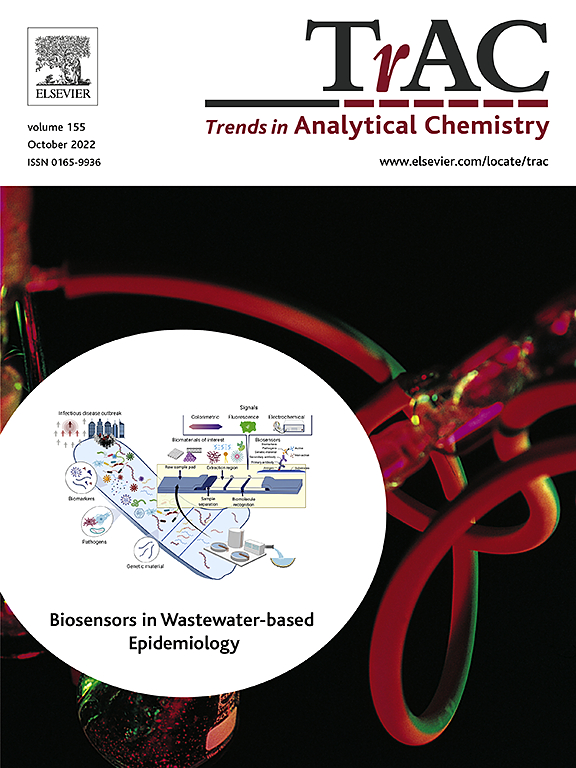
Enantiomeric separation is an increasing research area, as well as the application of alternative solvents replacing classic volatile, flammable and toxic organic solvents. Among these novel solvents, chiral ionic liquids (CILs) have been widely used in sample preparation (extraction), gas chromatography, liquid chromatography, capillary electrophoresis and other techniques involved in enantioseparation. Likewise, surfactants and deep eutectic solvents have gained increasing attention in the last years because they are valid alternatives to CILs with a lower cost and/or diminished environmental impact. This review provides a comprehensive overview of the latest developments using these modern solvents applied to enantioseparations, focusing mainly on the applications of CILs. Furthermore, separation and preconcentration of chiral analytes in different matrices are also reviewed in this article. Articles published since 2017 to present were reviewed in this work. Critical discussion on their analytical application and future challenges related to their use are also included in this review. [Cerrar]
Thumbnail
Autor
Quintas, Pamela Y.;   Fiorentini, Emiliano F.;   Llaver, Mauricio;   Gonzalez, Roxana Elizabeth;   Wuilloud, Rodolfo G.;  
Fuente
TrAC Trends in Analytical Chemistry : 116733 (Available online 7 July 2022)
Fecha
2022-07
Editorial
Elsevier
ISSN
0165-9936
URI
http://hdl.handle.net/20.500.12123/12302
https://www.sciencedirect.com/science/article/abs/pii/S0165993622002163
DOI
https://doi.org/10.1016/j.trac.2022.116733
Formato
pdf
Tipo de documento
artículo
Palabras Claves
Cromatografía; Chromatography; Cromatografía de Gases; Gas Chromatography; Cromatografía Gas-Líquido; Gas Liquid Chromatography; Electroforesis; Electrophoresis; Solventes; Solvents; Enantioseparations;
Derechos de acceso
Embargado
Descargar
Compartir
  • Compartir
    Facebook Email Twitter Mendeley
Excepto donde se diga explicitamente, este item se publica bajo la siguiente descripción: Creative Commons Attribution-NonCommercial-ShareAlike 2.5 Unported (CC BY-NC-SA 2.5)
Metadatos
Mostrar el registro completo del ítem