
Linking spatiotemporal and demographic patterns in modulating local population outbreak of invasive forest insect
Resumen
Understanding the spatial and demographic structure of local outbreaks is critical for identifying the ecological mechanisms underlying invasive forest insect dynamics. We investigated a population outbreak of Sirex noctilio within a pine plantation in Patagonia by integrating spatial analyses of infestation patterns with quantification of oviposition behaviour and adult performance.
At the plot level, the distribution of infested trees shifted from a
[ver mas...]
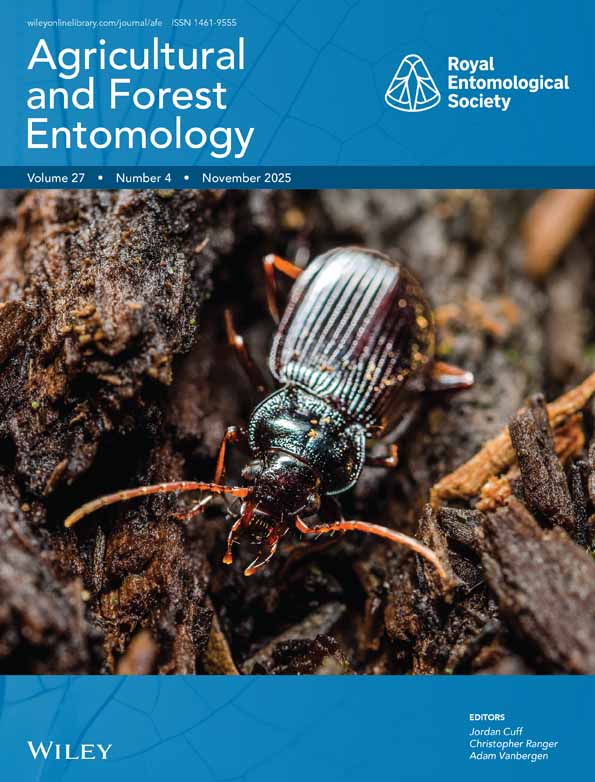
Fuente
Agricultural and Forest Entomology : 1-12. (First published: 19 November 2025)
Fecha
2025-11
Editorial
Wiley
ISSN
1461-9555
1461-9563
1461-9563
Documentos Relacionados
Formato
pdf
Tipo de documento
artículo
Proyectos
INTA/2023-PD-L01-I074, Bases ecológicas y epidemiológicas para el diseño de estrategias de manejo de plagas agrícolas y forestales
INTA/2023-PE-L03-I033, Gestión Sostenible de los sistemas forestales naturales y cultivados para el desarrollo de los territorios y la provisión de servicios ecosistémicos en Patagonia Andina
Palabras Claves
Derechos de acceso
Restringido

 Excepto donde se diga explicitamente, este item se publica bajo la siguiente descripción: Creative Commons Attribution-NonCommercial-ShareAlike 2.5 Unported (CC BY-NC-SA 2.5)
Metadatos
Mostrar el registro completo del ítem
Excepto si se señala otra cosa, la licencia del ítem se describe como info:eu-repo/semantics/restrictedAccess