
Facebook
Twitter
YouTube
Instagram
    • español
    • English
  • Contacto
  •  
    • español
    • English
  • Mi Cuenta
Acerca deAutoresTítulosTemasColeccionesComunidades☰
JavaScript is disabled for your browser. Some features of this site may not work without it.
Ver ítem 
    xmlui.general.dspace_homeCentros Regionales y EEAsCentro Regional CorrientesEEA CorrientesArtículos científicosxmlui.ArtifactBrowser.ItemViewer.trail
  • Inicio
  • Centros Regionales y EEAs
  • Centro Regional Corrientes
  • EEA Corrientes
  • Artículos científicos
  • Ver ítem

Genetic and morphological characterization of Acroceras macrum Stapf

Resumen
Acroceras macrum is a warm‐season grass used for pastures, and it has high nutritive value. The scarce genetic and reproductive information about this grass is limiting its breeding for forage. The objective of this research was to determine the number of genotypes and cytotypes present in a collection established in Argentina, and to estimate the diversity of this species based on molecular markers, and morphological and agronomic characteristics. The [ver mas...]
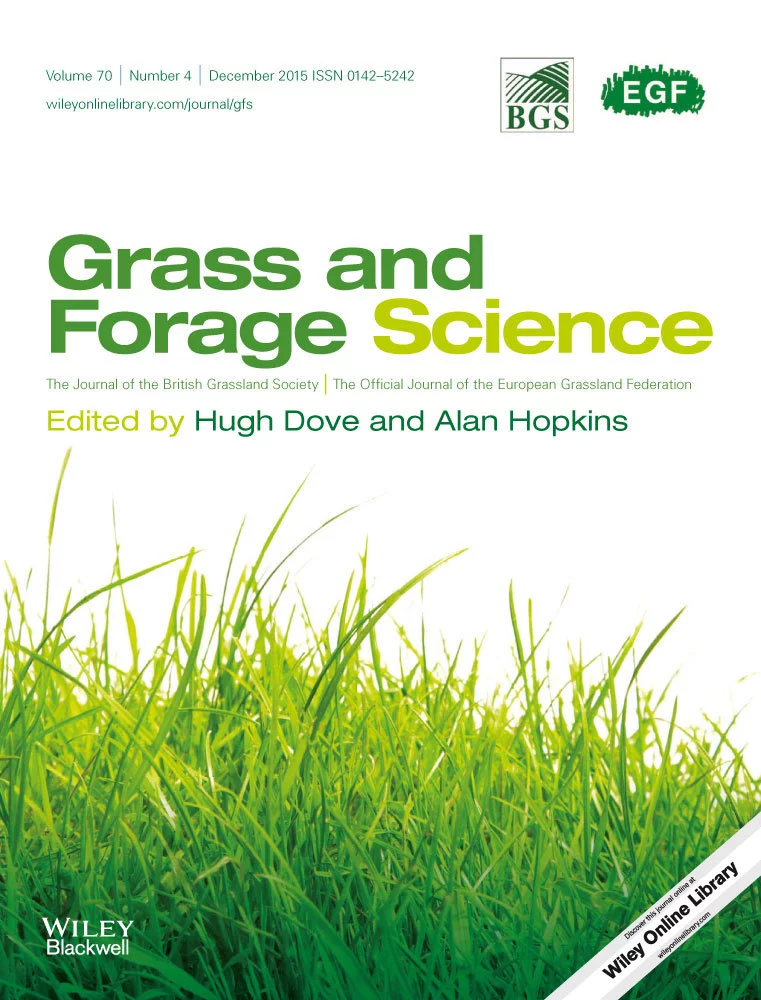
Acroceras macrum is a warm‐season grass used for pastures, and it has high nutritive value. The scarce genetic and reproductive information about this grass is limiting its breeding for forage. The objective of this research was to determine the number of genotypes and cytotypes present in a collection established in Argentina, and to estimate the diversity of this species based on molecular markers, and morphological and agronomic characteristics. The number of genotypes among forty‐seven accessions was determined using ISSR markers. The identified genotypes were further characterized for ploidy levels. In addition, the genetic distances among them were estimated with ISSR markers. They were also propagated and planted into the field following a randomized complete block design with four replications, and a group of sixteen morphological and agronomic variables were evaluated. A total of twenty‐seven genotypes were identified in this collection; twenty‐two genotypes were tetraploid (2n = 4x = 36) and five were hexaploid (2n = 6x = 54). These two cytotypes were found clearly separated by both genetic and phenotypic characteristics. Above‐ground biomass, internode length, initial growth and number of spikelets per inflorescence were the most variable traits. The high diversity present in this collection will allow for the initiation of a breeding programme for A. macrum. [Cerrar]
Thumbnail
Autor
Ferrari Usandizaga, Silvana Consuelo;   Brugnoli, Elsa Andrea;   Weiss, Alejandra I.;   Zilli, Alex Leonel;   Schedler, Mara;   Pagano, Elba Maria;   Martínez, Eric Javier;   Acuña, Carlos Alberto;  
Fuente
Grass and Forage Science 70 (4) : 695-704 (December 2015)
Fecha
2015-12
Editorial
Wiley
ISSN
0142-5242
1365-2494
URI
http://hdl.handle.net/20.500.12123/4651
https://onlinelibrary.wiley.com/doi/10.1111/gfs.12148
DOI
https://doi.org/10.1111/gfs.12148
Formato
pdf
Tipo de documento
artículo
Palabras Claves
Gramineas; Grasses; Acroceras macrum; Genética; Genetics; Morfología Vegetal; Plant Morphology; Marcadores Genéticos; Genetic Markers; Fitomejoramiento; Plant Breeding; Marcadores Moleculares;
Derechos de acceso
Restringido
Descargar
Compartir
  • Compartir
    Facebook Email Twitter Mendeley
Excepto donde se diga explicitamente, este item se publica bajo la siguiente descripción: Creative Commons Attribution-NonCommercial-ShareAlike 2.5 Unported (CC BY-NC-SA 2.5)
Metadatos
Mostrar el registro completo del ítem