
Ver ítem
- xmlui.general.dspace_homeCentros e Institutos de InvestigaciónCICVyA. Centro de Investigación en Ciencias Veterinarias y AgronómicasInstituto de GenéticaArtículos científicosxmlui.ArtifactBrowser.ItemViewer.trail
- Inicio
- Centros e Institutos de Investigación
- CICVyA. Centro de Investigación en Ciencias Veterinarias y Agronómicas
- Instituto de Genética
- Artículos científicos
- Ver ítem
Chromosome-scale genome assembly of the South American fruit fly, Anastrepha fraterculus sp.1
Resumen
Anastrepha fraterculus is a cryptic species complex with at least eight morphotypes distributed across the Americas. Among them, A. fraterculus sp.1, present in Argentina, is a major pest impacting fresh fruit production. Integrated pest management strategies, including chemical control and trapping, are currently employed to mitigate its effects. Genetic sexing strains of A. fraterculus sp.1 are being evaluated for use in sterile insect technique
[ver mas...]
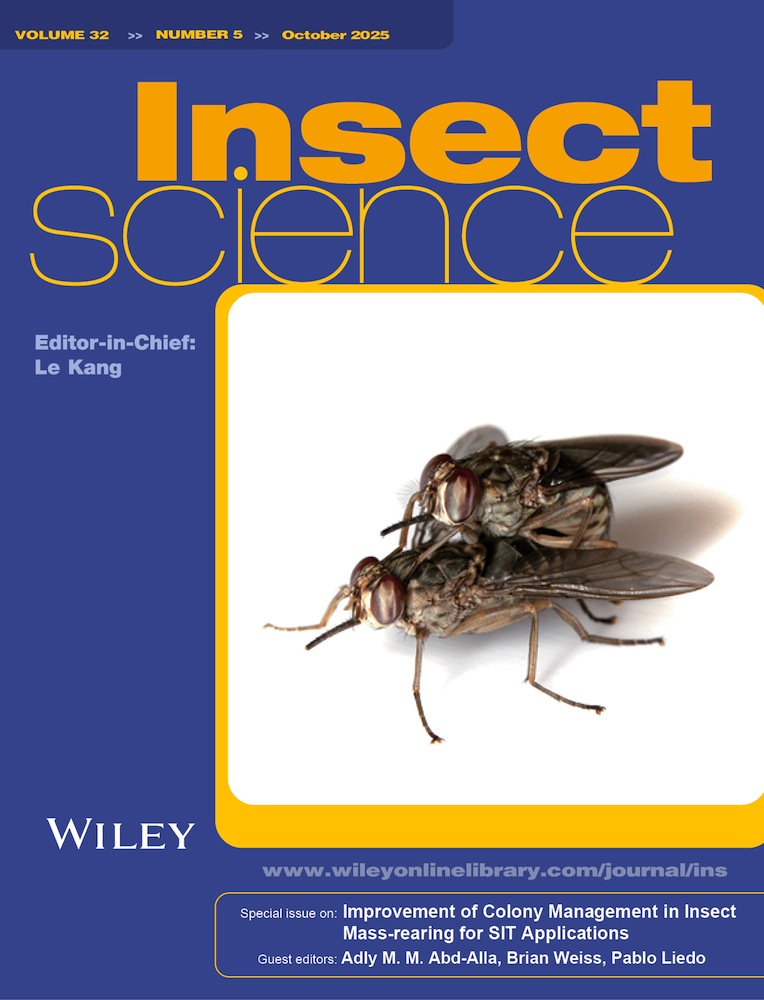
Anastrepha fraterculus is a cryptic species complex with at least eight morphotypes distributed across the Americas. Among them, A. fraterculus sp.1, present in Argentina, is a major pest impacting fresh fruit production. Integrated pest management strategies, including chemical control and trapping, are currently employed to mitigate its effects. Genetic sexing strains of A. fraterculus sp.1 are being evaluated for use in sterile insect technique programs. To support traditional and emerging control methods, this study aimed to enhance the genomic understanding of this morphotype. Individual female and male samples were sequenced using long- and short-read technologies. The female genome (760 Mb) was de novo assembled into 58 scaffolds and the male genome (750 Mb) into 68 scaffolds, with BUSCO completeness scores of 98.8% and 98.7%, respectively. Synteny analysis revealed complete scaffolds of the five autosomes and enabled near-complete reconstruction of the X and Y chromosomes. Gene prediction identified 17 751 and 16 535 protein-coding genes (for female and male genomes, respectively), with repetitive regions representing 46% of both genomes. Additionally, the mitochondrial genome was fully assembled and annotated. This comprehensive genomic resource reveals candidate genes for functional studies, including gene editing and RNA interference, as successfully applied in related tephritid species. These findings lay the foundation for innovative, complementary biocontrol tools against A. fraterculus.
[Cerrar]

Autor
Rivarola, Maximo Lisandro;
Conte, Claudia Alejandra;
Berube, Pierre;
Chen, Shu-Huang;
Giardini, Maria Cecilia;
Scannapieco, Alejandra Carla;
Milla, Fabian Horacio;
Soria, Maria Celeste;
Russo, Romina Maria;
Wulff, Juan Pedro;
Djambazian, Haig H.;
Pomar, Rolando R.;
Handler, Alfred M.;
Bourtzis, Kostas;
Ragoussis, Ioannis;
Lanzavecchia, Silvia Beatriz;
Fuente
Insect Science : 1-25 (First published: 21 October 2025)
Fecha
2025-10
Editorial
Wiley
ISSN
1744-7917
Documentos Relacionados
Formato
pdf
Tipo de documento
artículo
Proyectos
(ver más)
INTA/2023-PD-L01-I087, Caracterización de la diversidad genética de plantas, animales y microorganismos mediante herramientas de genómica aplicada.
Palabras Claves
Derechos de acceso
Restringido
Excepto donde se diga explicitamente, este item se publica bajo la siguiente descripción: Creative Commons Attribution-NonCommercial-ShareAlike 2.5 Unported (CC BY-NC-SA 2.5)


