
Early selection for spike fertility index increases yield of advanced generations in bread wheat
Resumen
Spike fertility index (a.k.a. fruiting efficiency) at maturity (FEm -grain number per spike/g spike chaff at maturity-) and spike harvest index (SHI -grain weight per spike/g spike chaff weight at maturity-) are considered promising selection criteria for improving grain yield (GY) in bread wheat. However, their usefulness in early generations remains to be established. Here, a population derived from a cross between ‘Baguette 10′ and ‘Klein Chajá’ was
[ver mas...]
Fuente
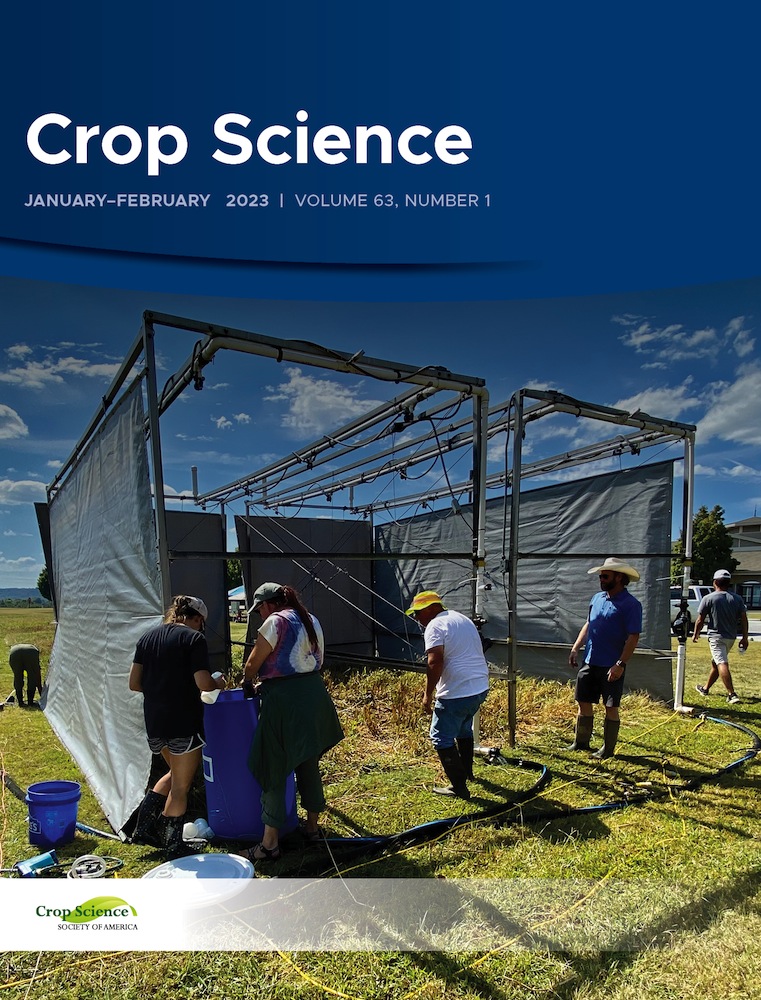
Crop Science 63 (3) : 1070-1081. (May/June 2023)
Fecha
2023-03
Editorial
Wiley
ISSN
0011-183X (print)
1435-0653 (online)
1435-0653 (online)
Documentos Relacionados
Formato
pdf
Tipo de documento
artículo
Proyectos
INTA/PNCYO-1127044/AR./-Desarrollo de germoplasma y cultivares comerciales de cereales de invierno
Palabras Claves
Derechos de acceso
Restringido

 Excepto donde se diga explicitamente, este item se publica bajo la siguiente descripción: Creative Commons Attribution-NonCommercial-ShareAlike 2.5 Unported (CC BY-NC-SA 2.5)
Metadatos
Mostrar el registro completo del ítem
Excepto si se señala otra cosa, la licencia del ítem se describe como info:eu-repo/semantics/restrictedAccess