
Facebook
Twitter
YouTube
Instagram
    • español
    • English
  • Contacto
  •  
    • español
    • English
  • Mi Cuenta
Acerca deAutoresTítulosTemasColeccionesComunidades☰
JavaScript is disabled for your browser. Some features of this site may not work without it.
Ver ítem 
    xmlui.general.dspace_homeCentros e Institutos de InvestigaciónCICVyA. Centro de Investigación en Ciencias Veterinarias y AgronómicasInstituto de BiotecnologíaArtículos científicosxmlui.ArtifactBrowser.ItemViewer.trail
  • Inicio
  • Centros e Institutos de Investigación
  • CICVyA. Centro de Investigación en Ciencias Veterinarias y Agronómicas
  • Instituto de Biotecnología
  • Artículos científicos
  • Ver ítem

A tomato tocopherol-binding protein sheds light on intracellular a-tocopherol metabolism in plants

Resumen
Tocopherols are non-polar compounds synthesized in the plastids, which function as major antioxidants of the plant cells and are essential in the human diet. Both the intermediates and final products of the tocopherol biosynthetic pathway must cross plastid membranes to reach their sites of action. So far, no protein with tocopherol binding activity has been reported in plants. Here, we demonstrated that the tomato SlTBP protein is targeted to [ver mas...]
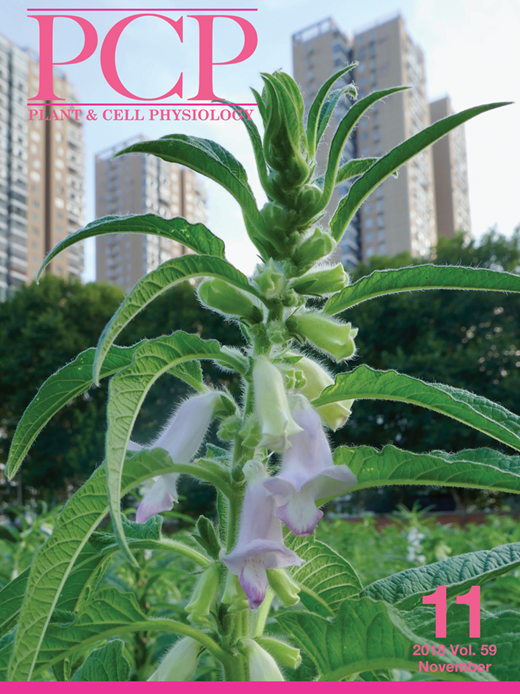
Tocopherols are non-polar compounds synthesized in the plastids, which function as major antioxidants of the plant cells and are essential in the human diet. Both the intermediates and final products of the tocopherol biosynthetic pathway must cross plastid membranes to reach their sites of action. So far, no protein with tocopherol binding activity has been reported in plants. Here, we demonstrated that the tomato SlTBP protein is targeted to chloroplasts and able to bind α-tocopherol. SlTBP-knockdown tomato plants exhibited reduced levels of tocopherol in both leaves and fruits. Several tocopherol deficiency phenotypes were apparent in the transgenic lines, such as alterations in photosynthetic parameters, dramatic distortion of thylakoid membranes and significant variations in the lipid profile. These results, along with the altered expression of genes related to photosynthesis, and tetrapyrrole, lipid, isoprenoid, inositol/phosphoinositide and redox metabolism, suggest that SlTBP may act in conducting tocopherol (or its biosynthetic intermediates) between the plastid compartments and/or at the interface between chloroplast and endoplasmic reticulum membranes, affecting interorganellar lipid metabolism. [Cerrar]
Thumbnail
Autor
Bermudez Salazar, Luisa;   del Pozo, Talía;   Lira, Bruno Silvestre;   Godoy, Fabiana de;   Boos, Irene;   Romano, Cecilia;   Previtali, Viola;   Almeida, Juliana;   Brehelin, Claire;   Asis, Ramón;   Quadrana, Leandro Daniel;   Demarco, Diego;   Alseekh, Saleh;   Salinas Gamboa, Rigel;   Perez-Flores, Laura;   Dominguez, Pia Guadalupe;   Rothan, Christophe;   Fernie, Alisdair R.;   Gonzalez, Maurıcio;   Stocker, Achim;   Hemmerle, Andreas;   Clausen, Mads Hartving;   Carrari, Fernando;   Rossi, Magdalena;  
Fuente
Plant and Cell Physiology 59 (11) : 2188-2203 (Noviembre 2018)
Fecha
2018-11
Editorial
Oxford University Press
ISSN
1471-9053
URI
https://academic.oup.com/pcp/article/59/11/2188/5101312
http://hdl.handle.net/20.500.12123/4819
DOI
https://doi.org/10.1093/pcp/pcy191
Formato
pdf
Tipo de documento
artículo
Palabras Claves
Tomatoes; Tomate; Tocopherols; Tocoferoles; Chloroplasts; Cloroplasto; Proteins; Proteínas;
Derechos de acceso
Restringido
Descargar
Compartir
  • Compartir
    Facebook Email Twitter Mendeley
Excepto donde se diga explicitamente, este item se publica bajo la siguiente descripción: Creative Commons Attribution-NonCommercial-ShareAlike 2.5 Unported (CC BY-NC-SA 2.5)
Metadatos
Mostrar el registro completo del ítem