
Facebook
Twitter
YouTube
Instagram
    • español
    • English
  • Contacto
  •  
    • español
    • English
  • Mi Cuenta
Acerca deAutoresTítulosTemasColeccionesComunidades☰
JavaScript is disabled for your browser. Some features of this site may not work without it.
Ver ítem 
    xmlui.general.dspace_homeCentros Regionales y EEAsCentro Regional Santa FeEEA RafaelaArtículos científicosxmlui.ArtifactBrowser.ItemViewer.trail
  • Inicio
  • Centros Regionales y EEAs
  • Centro Regional Santa Fe
  • EEA Rafaela
  • Artículos científicos
  • Ver ítem

Natural infestation of Hydrochoerus hydrochaeris by Amblyomma dubitatum ticks

Resumen
Natural infestation of Amblyomma dubitatum in relation to individual specific attributes of Hydrochoerus hydrochaeris such as sex, body mass and body condition was analyzed. The anatomical distribution of A. dubitatum on H. hyrochaeris was also evaluated. Prevalence of adults and nymphs were significantly higher than prevalence of larvae. Non-significant differences in the infestation levels were found among host sex. Multiple regression analysis did not [ver mas...]
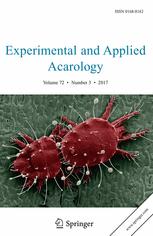
Natural infestation of Amblyomma dubitatum in relation to individual specific attributes of Hydrochoerus hydrochaeris such as sex, body mass and body condition was analyzed. The anatomical distribution of A. dubitatum on H. hyrochaeris was also evaluated. Prevalence of adults and nymphs were significantly higher than prevalence of larvae. Non-significant differences in the infestation levels were found among host sex. Multiple regression analysis did not show any statistically significant association among the level of infestation with ticks and body mass and body condition of the host. All parasitic tick stages were collected in all five anatomical areas of the host, but they exhibited significant differences in feeding site preference. Factors associated to the host which determine the high levels of infestation with A. dubitatum could be assigned to a combination of population-level properties of the host as abundance, ubiquity and aggregation, rather than individual specific attributes related to body condition, body mass or sex. [Cerrar]
Thumbnail
Autor
Debarbora, Valeria Natalia;   Mangold, Atilio Jose;   Eberhardt, Ayelén;   Guglielmone, Alberto;   Nava, Santiago;  
Fuente
Experimental and applied acarology 63 (2) : 285–294. (June 2014)
Fecha
2014-06
ISSN
0168-8162
1572-9702
URI
https://link.springer.com/article/10.1007%2Fs10493-014-9768-0
http://hdl.handle.net/20.500.12123/2256
http://ri.conicet.gov.ar/handle/11336/25543
DOI
https://doi.org/10.1007/s10493-014-9768-0
Formato
pdf
Tipo de documento
artículo
Palabras Claves
Hydrochoerus hydrochaeris; Amblyomma; Plagas de Animales; Pests of Animals; Infestación; Infestation; Carpincho; Capybara; Amblyomma dubitatum; Garrapatas;
Derechos de acceso
Restringido
Descargar
Compartir
  • Compartir
    Facebook Email Twitter Mendeley
Excepto donde se diga explicitamente, este item se publica bajo la siguiente descripción: Creative Commons Attribution-NonCommercial-ShareAlike 2.5 Unported (CC BY-NC-SA 2.5)
Metadatos
Mostrar el registro completo del ítem